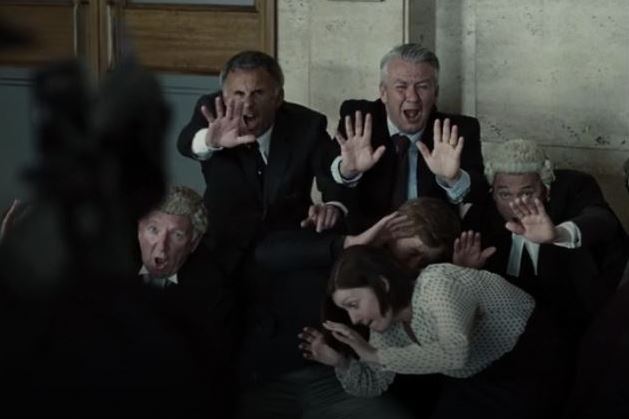
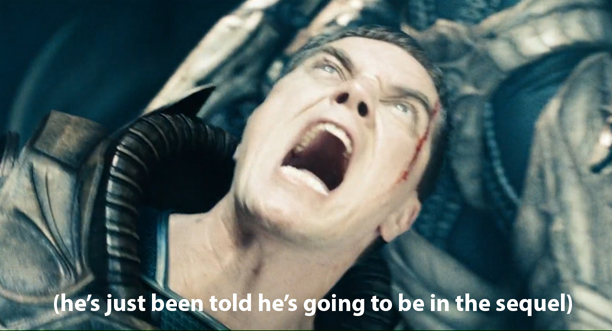
1. I don’t know where to start with Captain Marvel. So many things went so wildly wrong that we’d need a presidential commission to get to the bottom of it. It’s like the Chernobyl of superhero movies.
2. If at any point you feel like your action movie would benefit from a character whose main role in-scene is to hold a cat, get back to rewrite.
3. The conflicts are completely toothless. Over the first 10-odd minutes of the movie, the main character conflict is faceless asshats criticizing an unusually robotic protagonist for being too emotional. I would STRONGLY recommend building conflicts that fit your characters and that they can’t easily walk away from. For example, if you want a conflict around a character being too emotional, it would help a lot if they were not the least emotionally engaging superhero ever filmed. Even Groot has more emotional variety than Captain Marvel does, and he’s a tree with a 5 word vocabulary.

In contrast, here’s some stills from Wonder Woman. You can be a serious warrior and still radiate charm and excitement.

Also, Marvel’s SFX teams have done amazing work expressing human emotion in characters that should not be able to support it. I’m particularly fond of the moment where Groot – the character with the softest edges in Guardians – follows up on killing several henchmen in an uncharacteristically brutal way by giving his teammates a childish “aren’t you so proud of me?” smile.

3.1. The “young lady” exchange. Talos refers to Maria as a “young lady” (which is out of voice/character for him and comes out of nowhere), Maria threatens to kick his ass, and Talos backs off immediately. If you must have this exchange, it’d probably be better to commit to the conflict. Talos, a soldier on a desperate mission to allow what’s left of his people to flee a genocide, has tragic and brutal material to work with. Dropping some perspective on Maria would probably be more interesting than backing down instantly. E.g. MARIA: “If you call me ‘young lady’ again, I will kick your ass.” TALOS: “I’ve had to bury towns of murdered Skrulls. I don’t have time for etiquette lessons, and if you threaten me again, I’ll be burying you too.” If a character backs off of a conflict instantly, it’s probably not worth having. Don’t waste your time firing blanks.
3.2. Relatedly, if a teammate casually threatens violence against someone they’ve known for less than 30 minutes, that should not pass without some sort of consequence or reaction (e.g. the other person might take it really badly, particularly if they are an alien soldier fighting off a genocide… or maybe they mouth off at each other and they both react really well to how fiery the other person is).
3.3. I think this exchange makes Maria look unlikable. She’s threatening violence against an alien soldier that isn’t attempting to offend her, and being an alien makes it immediately obvious he might not have the cultural background to understand that he is offending her. This is a more forceful response than I think any Marvel protagonist has given to any insulting banter, particularly from another protagonist, and it doesn’t give Talos anything interesting to respond to. In contrast, when Rocket gets called a “trash panda”, even the gun-toting raccoon in question responds by walking away with a relatively tame “You son of a…”.
3.4. In the first Guardians movie, Rocket gets some truly vicious insults (e.g. “vermin”, “rodent”, being compared to a species that Drax grills on skewers, etc) and eventually nearly breaks down in tears. Losing your cool that much could be dangerous for protagonist likability, but emotional variety saves him. By the point this happens, Rocket’s already established himself as a badass, and he’s been more collected in similar situations (e.g. “not helping!” when insulted while during a critical moment of a jailbreak). In contrast, when Maria snaps over “young lady”, she hasn’t had an opportunity to establish that this is out of character for her, nor has she handled similar situations in a more typically heroic way. I think she comes across looking clownish here.
3.5. Nick Fury reports their location to his boss. This is a major breach of trust and, in a better movie, it’d be a good opportunity for major conflict between the two. There should have been consequences more serious than Marvel taking his communicator away. At the very least, when she sees Agent Coulsen lie to his team rather than give SHIELD their location, she might say something to Coulsen that knocks Fury (e.g. “you’re the only SHIELD agent I’ve met that hasn’t tried betraying me to the Skrulls – are you sure you’re not available for this mission?”).
3.6. The sexist conflict is just awful. 1) It’s extremely hard to respond to demographic bullying (e.g. “You know why they call it a cockpit?”) in a way that’s interesting. I think a best case scenario would be having Carol respond with an offbeat quip like “Because you’re a dick.” This is mildly funny and definitely a better response than nothing but it doesn’t fix the gaping structural problem that a “I hate you because you’re a (demographic)” conflict probably doesn’t have enough depth to it and won’t create as many opportunities for interesting dialogue or interesting choices as a more promising conflict would. In this case, the sexist characters didn’t contribute to any good scenes, they didn’t get any good lines, and they didn’t even have enough depth to get names. 2) It tends to reduce characters to demographic boxes rather than their choices and reduces their agency over their story. Ironically, X-Men (a series which hinges on persecution) tends to handle this pretty well – e.g. CIA humans and CIA mutants distrust each other in First Class, which is a more flexible and promising setup than “mutants can’t be CIA agents.” Also, the mutual distrust generally has more substance than “I hate you because you’re a mutant.”
3.7. There’s no conflicts between the Maria and Captain Marvel in the now of the story, e.g. no major disagreements about tactical approaches or courses of action or even whether Maria should be on the mission. The closest they come is a brief exchange where Maria complains that Captain Marvel won a race 5 years ago by taking a shortcut. It’s a non-issue and doesn’t contribute to character or plot development. Weak sauce. The conflicts between Captain Marvel and Nick Fury (who briefly betrays her) and Talos (her ex-enemy) are also surprisingly weak. In particular, if ever there were a teammate that shouldn’t be excited to relegate his goals 100% to the main character, Talos is a general facing a genocide while allied to a human that’s notably unexcited about him and at best a newcomer to his struggle. (And, also, until like a week ago she was assisting the extermination campaign).
4. The scene introducing the real Lawson is shockingly boring. Before this scene, we’ve learned that Lawson is the character Carol most respects, setting high expectations for Lawson. Compare to the crazy hype for Tony Stark early in Iron Man, which Tony Stark actually delivers on. When we first see the actual Lawson, she’s incredibly bland and the scene runs like a first draft. Adding insult to injury: repeating lines that were mediocre the first time makes them worse, and there’s no reason in scene to repeat the lines.
SKRULL TECHNICIAN: Hang on, I think I’ve got it.
LAWSON: Goose likes you. She typically doesn’t take to people. (If your character’s first line is about what her cat likes, get back to rewrite).
CAROL: Early start to your morning?
LAWSON: Late night, actually. I can’t sleep when there’s work to do. Sound familiar?
CAROL: Flying your plane never feels like work.
LAWSON: Wonderful view, isn’t it?
CAROL: I prefer the view from up there.
LAWSON: You’ll get there soon enough, ace.
(scene starts to rewind)
LAWSON: Sound familiar?
TALOS: Wait, wait, wait! That’s her. Get her back.
TECHNICIAN: Stand by.
LAWSON: Wonderful view, isn’t it?
CAROL: I prefer the view from up there.
LAWSON: You’ll get there soon enough, ace.
TALOS: What’s that on her shirt? I couldn’t read it.
LAWSON: Wonderful view, isn’t it?
CAROL: I prefer the view from up there.
TALOS, to Carol: Focus.
CAROL: Excuse me?
TALOS: Look down.
TALOS, reading. Pegasus. Dr. Wendy Lawson. That’s her.
CAROL: Do you hear that, too? (This is a notably weak reaction to hearing voices and getting weirded out by conversations repeating themselves).
TALOS: Do we have her location?
TECHNICIAN: Got it.
TALOS: Now track Lawson until we find the energy signature.
4.1. There’s about four minutes of Talos navigating his way through her memories. She’s a fighter pilot, she drives a go-kart recklessly, male cadets think she’s too emotional (Christ, not this again), she plays pool and sings in a bar, and she finds an alien ship. This is a lot of time to spend without making an impact. I’d suggest focusing on 1-2 of these and making them count. One concept for this scene that would have created more interesting opportunities for interaction between Marvel and Talos would be an interrogation scene where the two talk as her memories play out on Skrull monitors. Having her react to her memories and/or offer any insight beyond what we’re seeing and/or any sort of conflict with Talos is more promising than having her unconscious.
4.2. If you’d ever want your main character unconscious during a scene focused on her backstory, you probably don’t have the right main character, or the right backstory.
4.3. If you’d ever want your main character unconscious during a scene where he/she could be talking to the main villain (or a character who appears to be), you probably don’t have the right concept for Talos, either. If the only purpose of this scene is to point Talos and/or Carol in the direction of Earth and establish the engine Macguffin, you have better opportunities than watching a pilot and alien scientist share unusually banal pleasantries. If it really is the case that Talos and Lawson cannot combine for more interesting scenes than this, I’d recommend overhauling and/or scrapping them.
5. Dialogue was off in a lot of places. Some examples:
- Every line addressed to or about the cat. E.g. “Who’s a good kitty huh? Huh Goose? Yes, that’s right. Who’s a good kitty Goose? You’re a good kitty.” I cannot imagine what raw footage the editors were looking at that made it look like this was the most promising option.
- “Then dig deeper. Lawson is our link to the light-speed engine. And everything we’re after…” When you’re having two characters talk about what they already know, I’d recommend sounding smoother than “As you know, Bob, this is what we already know.” In this case, I think something like “Then dig deeper. Find me the engine” would have sounded more natural.
- “Where’s Pegasus?” “That’s classified. Not unlike the file I’ve started on you.” This response is awkward and disjointed, and a missed opportunity to bring Fury into the scene in a more interesting way.
- Maria: “The Air Force still wasn’t letting women fly combat, so testing Lawson’s planes was our only shot at doing something that mattered.” 1) This superiority complex towards support teammates is ironic now that she’s a support teammate that matters much less to Captain Marvel’s mission than support staff do to USAF operations. 2) In a better movie, this would probably be used to establish conflict or that there’s something lacking about the character. E.g. in Cars*, a movie that needs children to quickly recognize that the main character is being an asshole, having the protagonist call out his teammates as beneath him or “your work doesn’t matter” would definitely work. If you’re not trying to establish the character as an asshole, I’d suggest having her see these other careers as not hard enough or not exciting enough rather than they don’t matter enough.
*This is probably the first time Cars has ever come to mind as a positive example. Cars is terrible, but it’s not this terrible.
- There are few if any moments where Talos feels believable as a military commander, and his phrasing is all over the place (e.g. “jazz hands”, “bad trip”, “young lady”, “science guy”). First, anyone stiff/formal enough to say “young lady” probably shouldn’t be using “science guy” or “bad trip.” Second, he’s slotted into a Drax-like “can’t get it” role like not knowing what a cat is, but none of this attempted humor lands at all and there’s no reason to have it. He’s a mind-melding shapeshifter, how can he not get it? If your character knows what “jazz hands” are, how does he not know what a cat is? In contrast, Drax from Guardians of the Galaxy is very consistently literal-minded and the character’s dry portrayal makes it effective. E.g. “Nothing goes over my head. (pause) My reflexes are too fast.” This is a lot better than “What’s a cat?”, or any other Talos line, for that matter.
- The “young lady” exchange.
- Every line including the word “emotion” or “emotional”.
- “All life on Earth is carbon-based, not this guy. Whatever he runs on, it’s not on the periodic table.” If you’re going to rip someone off (or “pay homage” or whatever this is), I’d suggest a better movie than Man of Steel. PS: A completely emotionless protagonist with no good dialogue didn’t work there, either.
- A Kree soldier mentions to Carol that it was disturbing seeing a shapeshifter take his appearance. CAROL: “Maybe if you were more attractive it would be less disturbing.” SOLDIER: “You think you’re funny, but I’m not laughing.” Carol’s one-liner is alright, but there was an opportunity here for a better followup, if the story hadn’t handicapped itself using a “No emotion/humor allowed” planet.
- “Name a detail so bizarre a Skrull could never fabricate it.” “I can’t eat toast that’s cut diagonally. But you didn’t need that, did you?” “No, but I enjoyed it.” This is probably the first good exchange in the movie. 40 minutes in. PS: It’d be cool if the first hour had a well-executed exchange that developed character or plot points more important than toast preference.
6. Side characters are grossly unable to contribute what they need to. None of the side-characters contribute anything useful that Captain Marvel doesn’t already have, e.g. no distinctive capabilities or skill sets (e.g. a shapeshifter that doesn’t shapeshift, a pilot on a team whose main character already is a pilot, and a gunman that spends more time talking to a cat than shooting). If they all stayed home, it’d be hard to notice the difference. It’s not like they’re contributing to interesting dialogue or charming moments, either.
6.1. Lawson the superscientist makes her scenes worse. She has no good lines at any point and her entire first scene is low-stakes chatting with no bearing on the plot. She doesn’t contribute anything besides a superpowered engine. In contrast, most logistical support characters (particularly Marvel super-scientists) create interesting conversations with their leads. E.g. Iron Man and Rocket are in a league of their own, and I’d also recommend checking out Beast in First Class, Shuri in Black Panther, Pym in the Ant-Man series, and Edna in Incredibles. It’s hard to imagine any of these characters ever having a scene as boring as what we got from Lawson.
6.2. Nick Fury has a great car chase. After that, he gets a lot of screentime but doesn’t actually contribute anything. I think Incredibles’ approach to Frozone and Black Panther’s approach to the CIA pilot was more effective here – their screentime is brief and impactful. They’re never useless. Nick Fury should either have been written out after Marvel enters the military base or been given a reason to stay around. As it is, he gets beat up by Talos, he’s reduced to holding a cat in the final mission, he loses an eye to a cat, he sings a Marvelettes song, and he helps with dishes. I don’t think I can point to any moment post-car-chase where Fury makes a scene more interesting, and he bends over backwards to make them worse. In particular, the baby talk between him and the cat is just embarrassing. Rereading the transcript, I feel so bad for Samuel L. Jackson. This is worse than getting eaten first in Deep Blue Sea.
6.3. Maria and secondarily Monica. First, Maria doesn’t have any capabilities Captain Marvel doesn’t, which makes her mostly useless in a movie where Captain Marvel is doing 99%+ of the work. If you need her around, I’d suggest giving her some unique ability to contribute (e.g. better at piloting a particular plane or a better scientist or whatever). Splitting the team up for some missions would also help — for example, a secondary objective might involve handling explosives, taking down a shield generator, creating a diversion, adding air support, providing an escape route, etc). As it is, the only thing Maria adds that Captain Marvel doesn’t already have is the ability to gush about how amazing Captain Marvel is, and God does she use it. “You are Carol Danvers. You are the woman on that black box risking her life to do the right thing. My best friend… who supported me as a mother, and a pilot when no one else did. You’re smart and funny, and a huge pain in the ass. And you are the most powerful person I knew, way before you could shoot fire from your fist. You hear me? You hear me?” Across the board, 20% of her lines (14 out of 70) cover how impressive Carol is or how much Carol means to her. In more effective movies, there’s ups and downs in team cooperation (e.g. check out friction between teammates in Guardians of the Galaxy, Avengers, and Into the Spider-Verse). Protagonists usually have more setbacks and have to work harder to prove themselves. PS: If you absolutely do need to have someone deliver gushing praise to Captain Marvel, it’d probably sound less bad coming from the grade-schooler than a hardened fighter pilot, and preferably after the villain is defeated (less damage to pacing).
PS: I would guess that this movie had more lines praising the main character than Lincoln or Gandhi. It’s a distinctive approach for an action movie, particularly one with a main character this meh. I think it makes more sense in the opening of Iron Man because a character whose signature flaw is massive ego problems and/or overconfidence NEEDS to be highly competent to avoid massive likability issues. Also, Iron Man is extraordinarily charming from minute 1.
6.4. Neither Captain Marvel nor her side characters have any charm or chemistry together. An effective side-cast could have helped somewhat. I think the two biggest issues here are the lack of conflict within the team and Carol’s lack of personality. (E.g. the side-antagonists she shared with Guardians of the Galaxy had much better scenes with Quill in GOTG than with Captain Marvel, and let’s not even talk about the huge downgrade she gave Nick Fury).
7. The movie is unusually heavy on unnecessary audience cues. Don’t call out your viewers as idiots, and don’t waste time.
- “TORFA: KREE BORDER PLANET.” This comes seconds after a scene mentioning that they were going on a mission to this planet.
- “SUPREME INTELLIGENCE – AI LEADER OF KREE CIVILIZATION” – this could have been handled more smoothly in-scene.
- There’s no need to have Fury’s boss Keller reveal himself to the audience as a Skrull by caressing the corpse. First, doing this with humans in the room makes him look careless/incompetent, which reduces the threat level. Second, the later scene in the elevator covers this better, and I don’t think there’s any plot need to reveal this before then.
- “That’s no MiG”. What gave it away, the lasers? Or the spaceflight?
- “She’s trying to break out.”
- The heroes see a steaming cup of coffee on a ship they expect to be abandoned. “We’re not alone.” I think that’s obvious to anyone older than 8. Having a character silently alert other characters to the coffee should be enough, and maybe Captain Marvel charges up her photon blaster to cue kid viewers that the threat level is higher than it was a few seconds ago.
- “It’s firing behind it” – a close-up shot on rear-mounted lasers and Captain Marvel dodging incoming fire would probably cover this more smoothly.
- “Species: Flerken. Threat: High.” Talos panicked after seeing the flerken, so it should be pretty obvious that the cat is dangerous.
- “I’m Just A Girl” – If you’re going for 1990s songs that are uncreatively on-the-nose for Captain Marvel, I’d suggest Wannabe, I Don’t Have the Heart, and Frozen.
8. Scene timing: There’s an early scene with Carol and the Supreme Intelligence, but they’re probably not able to have an interesting scene at this point. They don’t really have anything to talk about besides the backstory with the Skrulls and making Carol completely emotionless, neither one of which is particularly promising. The backstory with the Skrull war is common knowledge in-setting, so we might be able to handle this more smoothly in a news blurb about a Skrull imposter getting arrested or an update in the war on the Skrulls. Alternately, it might be possible to handle this in the briefing scene for the mission to Torfa.
9. If you’re creating an alien species, I’d recommend that they either all look human or all look non-human, especially if your plot involves a human taken in by aliens. Yon-Rogg looks 100% human, and we shouldn’t have to guess whether he’s a human or not. (PS: He’s not).
9.1. Having Lawson as a Kree rather than a Skrull creates some plot holes. It doesn’t make much sense that the Kree, a warrior species with no shapeshifting capabilities, would have a critical scientist work as a lone infiltrator on a remote world where they have no other presence. It’d be in character for the Skrull, though, and it’d make sense why a shapeshifting Skrull would look exactly like a human. This feels like they were originally planning for Lawson as a Skrull but switched her to a Kree without thinking it through.
10. Captain Marvel takes place a few years after Desert Storm. If Maria is willing to threaten violence over “young lady”, I’m guessing she’s a civilian now because she got court-martialled the first time she met a Saudi. My personal canon is that she caused somebody’s son to draw a weapon to protect the tribal honor based on what he heard third-hand from somebody’s cousin who separately has a blood feud going against Western forces for backing a military commander from a family that stole his great-grandfather’s herd three generations ago. And it’s still a better love story than Twilight.
11. The challenge level is unusually low. When the threats are this weak, it considerably reduces opportunities for suspense and excitement.
12. Carol’s demeanor and bearing does not feel believable for a fighter pilot. Even before the Kree capture her, she’s unusually restrained in a position that’s iconically daring and bold. If your character has a personality that’s at odds with her life goals, there might be some quality opportunities there for conflict and/or personality development. At it is, she’d probably be more believable as an intelligence analyst or doctor or an accountant. E.g. if she is supposed to be unusually gutsy (like her go-kart wreck suggests), maybe give her some bold missteps along the way? As it is the closest she comes to an unusually bold move is blasting a door into a highly secure section of a military base, but the story plays it like she is taking a stealthy approach (no guards are alerted, they’re able to quietly find the records they are looking for, etc). Her boldness never really creates problems for her, which I think is a major missed opportunity. (Similarly, Maria’s threat to kick Talos’ ass is a bold move that creates no problems and is instantly forgotten). PS: if you have a main character that plays it this safe, I’d suggest against naming any characters (particularly a cat) after a Top Gun character.
12.1. In her climactic moment, she’s challenged to melee combat (by someone that’s previously bested her in melee combat) and she instead blasts him with a laser. Blasting him is entirely reasonable, but she attempts to glorify taking the easier route as “I don’t need to prove myself to you” and it’s miserably pretentious. If someone tries to kill you, you don’t need to explain why you shot them — e.g. you know Han Solo or Indiana Jones wouldn’t have wasted any time there, and they’d have been helluva more charming, maybe with a self-explanatory smile. PS: What sort of test pilot passes on an opportunity to push themselves to their limits?
12.2. Military scenes: Compare “That’s not a MiG” to this amazing scene where Ms. Incredible pilots a plane under enemy fire. This Incredibles scene is extremely tense and one of the most judicious and effective uses of professional jargon I’ve ever seen. The acting, the dialogue and the fight choreography create danger and suspense completely missing from the Captain Marvel equivalent. Secondarily, there are some really cool things going on here like subtly creating a backstory for Ms. Incredible without ever explicitly saying that she was a military pilot. I’d much rather have 4 minutes of this scene than 4 minutes of Carol being generically rejected as a stockcar racer/cadet/pilot/whatever. It advances a major central conflict, it moves the characters forward in the plot, and it’s balls-to-the-wall exciting.
PS: The Incredibles scene uses anti-missile chaff without saying what it does. Having the plane barrel engage in evasive maneuvers as it’s firing the chaff makes it easier to see that the chaff is protection against the missiles. (Also, having the chaff angle towards the missiles is a good call – this gives viewers more information about what the chaff’s purpose is than a more passive drop would have). If a rated-G audience can figure out chaff, PG-13 filmmakers should have had more confidence in their audience’s ability to figure out what steaming coffee on an abandoned ship means, and in their own ability to provide context clues to help them.
12.3. One unusual plus to aerial combat for writers is that it’s one of the only kinds of combat where combatants have good reasons to talk during the fight and can sound natural doing so. If you’ve got an opportunity like that, you can do a lot better than “That’s not a MiG.”
13. Comparing Incredibles 1 to Captain Marvel, I believe that Ms. Incredible comes across as much more competent and active than Captain Marvel, even though they come from similar backgrounds. Some potential causes here:
- Ms. Incredible is treated as an individual in-story (e.g. no overt demographic discrimination), and the conflicts she has with other characters are more three-dimensional than anything Captain Marvel gets. E.g. contrast her conflict with Bob over how his desire to be a superhero causes them to have to relocate their family vs. Maria’s conflict between being a single parent and wanting to accompany Captain Marvel on a suicide mission. Maria almost instantly ditches her kid for a very high-risk mission because her kid tells her it’d be setting a bad example otherwise. First, caving like this is probably out of character for Maria (too soft, too squishy). 2) There are no consequences to this decision, it’s pretty gutless. One possible consequence would be that the person/people she needs to ask as potential parental surrogates are not 100% cooperative (e.g. an ex-husband that already thinks she’s not the most responsible parent). Another possible consequence would be that Maria might handle the mission a bit differently than a non-parent would, e.g. backing out on a particularly dangerous phase of the mission that she wouldn’t have as a younger pilot. (Bob not making this adjustment 100% is one of the main conflicts of the first half of Incredibles).
- The dialogue and acting/directing in Incredibles are much better. When I’m seeing a scene executed by very good actors, I know I could never do that even if I had the script in front of me, and a great actor would make me feel silly for trying. There are very few Marvel superheroes that get scenes that are so leaden that I wonder if one of the stuntmen or lighting staff* on-set could do a better job acting than the actors actually did, and besides Hawkeye and Peter Parker all of them are in Captain Marvel. In particular, Talos’ scenes are so mediocre that I wonder if I could do better. (I am confident that I wouldn’t be much worse, and if any data analyst is feeling bold enough to publicly make a claim like that, the acting/direction is probably not movie-ready).
*It’s not like the movie needed them for lighting. Look at how oppressively dark and washed-out the first 20-30 minutes are.
- Incredibles’ stakes are real and the adversaries are more competent – in particular, I’d recommend checking out the scene where Rohan and his fleet watch helplessly as they get wrecked by someone that learned how to fly 30 seconds ago. In comparison, Syndrome and his agents learn and adapt quickly to heroic tactics and they’re never a joke.