1. The character introductions were lacking. Having Waller narrate the characters’ backstories to a minor character in a no-stakes infodump was probably not ideal. If Waller’s MO is that she’s ruthless and/or exploitative, would have preferred a scene with her coercing Flag to work on the project and/or why they selected these guys rather than any other high-stakes criminals available. Also, given that virtually all of the characters are total unknowns to most viewers, a smaller team would probably have helped with character development. (Failing that, if you start with a large team of antiheroes, having several deaths would probably have helped raise the stakes and establish a mood).
2. It probably would have helped if the main mission of the movie had been more shady and/or disagreeable. If a supervillain is ravaging a city, it’s not clear why the government needs a “plausible deniability” option here of unwilling gangsters with guns and bats rather than, say, asking Batman or Wonder Woman to step in. Or that having 6 minor criminal patsies would have helped explain at all why a sorceress wrecked a major city. I feel like a very messy police mission like trying to destroy a major gang and/or killing somebody that’s gone rogue and/or helping a VIP (maybe Waller) deal with a major case of blackmail would have been a better fit.
2.1. Waller’s trying to fake an answer to the wrong question. If a villain magically turns millions of people into zombies, the blame coming your way doesn’t have anything to do about who did it, but rather that you either didn’t have a plan and/or it involved sending guys with guns and bats to stop a sorceress rather than, say, asking Wonder Woman. Also, if you DID need to falsely claim that someone zombified a city, could I suggest somebody more plausible than a group of minor criminals headlined by a crocodile and a prison psychiatrist?
2.2. The blame coming your way might also have something to do with “why was somebody as incompetent as Waller within 1,000 miles of a life-or-death assignment?”
2.3. “When Enchantress started killing millions of people, why didn’t we immediately flip the kill-switch on her magical device?”
3. The music selection was ugly. E.g. playing “Sympathy for the Devil” to introduce a shady character with semi-sympathetic goals calls out the viewers as idiots, I think. Not nearly subtle enough. In contrast, Killer Croc got the much more imaginative “Born in the USA”, rather than (God help us) Crocodile Rock.
4. June is the worst archeologist in the world. She spends less than 10 seconds in the temple before twisting the head off a priceless relic that nearly destroys the world. Whoops. Not to be outdone, she falls for the worst soldier in the world, whose superpower is playing golf without a handicap and bungling pretty much everything he touches.
5. The team selection is an odd choice: Harlequin, Killer Croc, Captain Boomerang, Diablo, Katana, Deadshot, and Slipknot. Slipknot and Captain Boomerang are joke characters that contribute very little to the plot. (Seriously, Slipknot’s reason for being on the team is that “he can climb anything”). Harlequin and Deadshot (and secondarily KC and Diablo) feel like a pretty good personality fit for the movie, and the four of them dominate the memorable lines. I would have removed or overhauled CB, Katana, Slipknot, and maybe Rick Flag – they have little impact on the plot, and there just isn’t time.
6. Enchantress feels like a serious mismatch for the protagonists. Someone shootable would probably have created more interesting interactions and better fight scenes, seeing as almost everyone on the team is a badass normal. (The team’s only superhumans are Diablo, Killer Croc, and maybe Katana – not the most intuitive choice for stopping a world-ending threat).
7. Characters raise plausible concerns about Waller’s plans in a fair way (and thoroughly exhaust standard police and military alternatives). In context, it almost feels believable that serious people would agree to this crazier-than-crazy plan. (If we pretend that Batman and Wonder Woman were dealing with some other world-ending threat somewhere else, it almost makes sense). Also, in the interests of making Waller/Flag look better than “totally useless”, it might help if the problem the team had to deal with was not 100% created by Waller being a dumbass. In, say, well-executed noir movies like Out of the Past, characters create their own problems, but without compromising their competence.
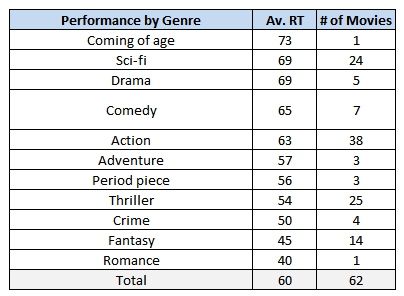
8. Although this movie did as poorly as Batman vs Superman on Rotten Tomatoes, I think Suicide Squad is considerably better-executed and more entertaining. E.g. Will Smith’s attempted negotiation with Flag and Waller actually did a great job advancing character development, establishing conflicts between characters, and advancing the central plot. I don’t think there were any scenes in BVS that managed any one of those besides maybe Bruce Wayne’s very brief conversation with Diana Prince.
9. Even for a superhero movie, SS asks you to check a lot of realism at the door. E.g. 3 helicopter crashes for major characters without any deaths or injuries. Seriously, it would have been okay to kill off some of these characters. No one in this movie besides Batman and maybe Joker is integral to the success of the DC Universe moving forward. Also, Rick Flag is a notably passive, weak character – besides killing off Slipknot early, he is curiously reluctant to respond to provocations from his team. I was actively rooting for his death.
10. Several of the characters (notably KC, Joker and Diablo) are taken in an unusually gangsta direction. It feels really strange for Joker, who comes across as more sketchy than threatening. For Killer Croc, it got oddly humorous, in a non-PC way.
11. Harlequin’s background as a psychiatrist does not feel like it fits with the rest of the character.
11.1. The sexploitation was actually pretty effective.
11.2. Harlequin getting punched in the face by Batman probably got the loudest laughter from the audience, followed by Deadshot trying to negotiate in prison.
12. Villains threatening worldwide destruction generally don’t give protagonists much to work with. Enchantress felt like a sorry rehash of the most recent Fantastic Four’s Dr. Doom and Green Lantern’s Galactus, even down to the purple vortexes of death and terrible CGI. It’s much harder for characters to interact with a force that has nothing to talk about. Off the top of my head, the only superhero movies with global villains that worked out creatively very well were the Avengers series and Guardians of the Galaxy, and they relied on exceptionally interesting interactions between the protagonists rather than with the villains.
13. Most of the teammates – and Flag and (if you go as far back as Green Lantern) Waller – have a tragic backstory to soften them. I was sort of hoping for at least one character to have an unapologetic Walter White-style “I did it for me. I was good at it.” The closest we got was Harlequin stealing a purse. While that helps reinforce the character’s craziness, maybe something more important to the central plot?
14. Deadshot’s final scene with his kid (helping her with geometry) was surprisingly heartfelt and refreshingly dark. The kid isn’t just a sweet plot device, and it’s probably the closest this movie got to daring. I wish they had tried it more often (e.g. see Deadpool). For example, maybe giving characters more opportunities to do more antiheroic things than stealing a purse? Giving Diablo and Flag more of a pulse? Making Waller competent?
14.1. Deadshot shows off technical expertise in his final scene very naturally – compare how he talks about the geometry of shooting people and the curvature of the Earth to virtually every Fantastic Four conversation about science.
15. The setting is beyond weak. It’s very generic and, like every DC city besides Gotham, it’s just a soulless cardboard box to wreck. No interesting characters, no interesting places, no distinctive mood to the city… For God’s sake, it’s called Fauxcago “Midway City.” How much personality could it possibly have? PS: Would suggest checking out better noir movies for better alternatives to “dark and rainy all the time.”
15.1Adding a character from Fauxcago (maybe one of the Suicide Squad members) might have helped. The only line from a Fauxcagoan I caught was a bride complaining that her wedding was ruined. Instead of a useful suggestion here, let’s have a moment of silence where we can reflect on the loving care that’s been put into developing Gotham as a vortex of crime and despair, where a bunch of random bank robbers or ferry passengers or pretty much anyone on the street can make a masterpiece scene. Unfortunately, this is Suicide Squad, and we can’t have nice things. We get Fauxcago, and a complaining bride. It’s the setting we deserve, not the one we need.
16. The last 60 minutes of the movie (50:00 to 1:48:00) were a single, REALLY LONG mission where the characters break into Fauxcago, rescue a VIP, and ultimately defeat the villain. I strongly prefer the pacing of virtually every other superhero movie (e.g. Avengers and Incredibles), where several (much shorter) action sequences build up to a climactic confrontation with the villain. That would have also made it easier to work in dialogue into scenes than it was for Suicide Squad – e.g. look at how weirdly paced the bar scene is. (The world’s about to end, but hey, let’s talk about Diablo’s backstory!)
17. Across the movie, I counted about 38 minutes of action scenes. I think that’s about twice the average for superhero movies. Some issues here. First, it got tedious. Second, most of the fight scenes were ineffective. E.g. did we really need 3-4 separate scenes of soldiers/helicopters/aircraft carriers getting wrecked? There are so many characters that could have used most of that space more.
17.1. Most of the action sequences setting up each SS member were wasted.
- Boomerang’s heist – there’s no emotional impact to the betrayal, and he comes across as helpless. No exaggeration here: this is probably the least interesting interaction I’ve ever seen between a superhero and a villain in any medium. Compare to the vastly better-executed heist scene in Dark Knight, which establishes Joker’s disloyalty and unpredictability and his conflict with more conventional criminal groups. I believe it’s an especially memorable scene because he makes major decisions (e.g. preemptively betraying his own men) that 99% of villains wouldn’t have made in the same situation.
- Katana’s scene stabbing a criminal in Japan was a heavy-handed way of showing her revenge angle, and it contributed to the movie in no other way. Easily removable.
- Diablo torching a prison yard, shown twice. Not terrible. The crown of fire is a neat touch (but seems to imply that he hasn’t changed as much after killing his family as he’s trying to show).
- Deadshot has 3 (a sample assassination which does a good job establishing his personality, getting taken down by Batman, and an inexplicably long scene where he shows off his skills by firing at dummies for 45 seconds straight).
- The Joker/Harlequin takedown by Batman is probably unnecessary – it covers a lot of the ground of Batman taking down Deadshot, but that scene did a better job establishing Deadshot’s relationship with his family.
18. The movie took far too long before the teammates first meet each other 45 minutes in. Virtually all of the moments in the movies that actually worked featured Squad members interacting together (or Deadshot with Flag or his daughter), and getting the Squad together much sooner would probably have helped with the pacing. If your first 45 minutes of the film give more screentime to Waller, faceless government extras, and Joker than the titular heroes, it’d really help if these side characters got more opportunities to be interesting or memorable. In comparison, most of the great superheroes movies that introduce the main case exceptionally late, like Iron Man 1 and Incredibles, used the extra time early on for scenes that were very interesting, hilarious, emotionally effective, developed the main characters, or developed critical plot elements – hell, Tony Stark’s “Merchant of Death” scene and Bob’s attempt to prevent a suicide went far on all 5. In Suicide Squad, the first 45 minutes don’t have anything that well-executed… I’d argue the closest is Deadshot’s interactions with his client, which create some character development and humor.
18.1. The odd men out here are definitely Waller, Joker, Enchantress and her brother (Incubus), and arguably Batman. Ideally, I think it would have helped to replace Enchantress/Incubus with villains that could interact with the heroes more directly, made Batman’s scenes more distinctive or removed him altogether, and significantly accelerated the setup to the squad coming together. I think Joker would be a candidate for lead villain, but I wouldn’t keep him on as a side villain because there are so many characters fighting for space. Also, overhauling Waller (more competent, more believable, more logical, more reacting to an actual problem rather than creating a problem that doesn’t exist yet, more threatening to teammates rather than maintaining no surveillance on the team, etc).
19. A point worth belaboring: Waller is outlandishly incompetent.
- At one point, she warns the squad, “Remember, I’m watching, I see everything.” Except that she doesn’t have, you know, team microphones or anything, which might have let her hear Boomerang goading Slipknot into bolting, or Deadshot telling HQ that he was going to kill Flag and the SEALs but needed Joker’s help with the nanites. So she’s less well equipped than a Counterstrike team.
- She appears to get off on lying for no apparent reason (e.g. goading Deadshot into pulling the trigger on a VIP security officer by telling him that the gun was disabled, and telling Rick that it was a standard terrorist attack).
- It doesn’t seem to occur to her that trying to trick Deadshot to kill somebody for no reason in front of the victim might cause the victim (who runs security for the prison housing her team!) to become less cooperative. And she doesn’t take any precautions against it, getting completely blindsided by a major asset getting turned by Joker, or his high-risk behavior playing in a heavily criminal casino. Nor is she aware that he’s slipped Harlequin a phone, and frankly there weren’t many places to hide it. She apparently trusts that to prison security, even after trying to have one of them killed for absolutely no reason.
- She’s not aware of her helicopter getting hijacked by Joker. The resulting surprise gets many people killed.
- Not being able to destroy the heart remotely, or put in a verbal command to someone who can. That seems like a pretty important capability, given that she knew Enchantress could teleport.
- She murders her own subordinates because “they weren’t cleared for any of this.” First, this serial killing feels completely unnecessary. However, if it were necessary, it might be safer to wrap it up before Flag and Deadshot can witness it. Second, she’s not even good at being bad – she shoots four people once each, and doesn’t check to make sure that they’re dead. That’s really sloppy… there’s a high risk that at least one will survive.
- No security precautions on the second doll.
- Her decision not to destroy the first doll after Enchantress goes rogue and/or takes over a city is a major plot hole that makes the movie significantly worse. If she’s not going to use this lever at this point, it’d probably be better not give her this lever – otherwise she’s just developing herself as weak/passive/incompetent by not using it.
- She allows herself (and the first doll) to be taken by Enchantress.
- At no point does she approach basic competence. The movie is jaw-droppingly consistent that she’s an active liability to everything she’s trying to accomplish.
19.1. While Rick is not as legendarily inept as Waller, he’s not exactly covering himself in glory.
- “I don’t do luck. I do planning and precision.” Except for, you know, any sort of plan that accounts for 50%+ of your team plotting to kill you, and you having no surveillance on them even as you have SEALs within 10 feet of the plotters. If your team’s situational awareness is that bad, you might as “do luck” and randomly blow up a teammate, because everyone on the team besides Katana and KC is openly discussing killing you.
- Flag lets HQ back onto the team even after she sides with Joker and gets most of his SEAL friends killed.