Jul
20
2009
We provide advice about
how to write novels, comic books and graphic novels. Most of my content applies to fiction-writing in general, but we also provide
articles specifically about superhero stories.
A large part of comedy comes from making references to other things, or by spoofing them. Here are a few things to keep in mind.
1. Know your target audience. A parody of Pride and Prejudice can be funny (even though it’s been done before… with zombies!), but if you’re writing about superheroes there’s a good chance a large chunk of your audience won’t get it because they’ve never read Pride and Prejudice. If you’re writing a superhero story then your best bet is to spoof comics, with a healthy dose of the movie versions. Also, the more famous the target, the better the odds are people will get the joke.
2. Know what you’re parodying. One common mistake of people making parodies is they don’t know what they’re spoofing. If you want to make a reference to Lord of the Rings don’t talk about a quest to find the One Ring. Anyone who knows about Lord of the Rings will be too busy banging their heads against the wall to laugh.
Continue Reading »
Oct
24
2008
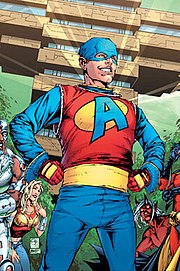
Superhero parodies are very hard to write. Generally, you can’t parody something that treats itself as ridiculous to begin with. This means that poking fun at ridiculous elements of superhero stories, like what superheroes wear, is usually unsuccessful. Fortunately, many elements have more comedic potential because the stories take them seriously.
1. Superhero origin stories have always been outlandishly tragic, but since roughly 1990 it has just been ludicrous. Instead of just watching his loved ones get murdered, the hero might get betrayed by the CIA, set on fire, sent to hell and then return as some sort of crazyass demon-hunter.
2. As superhero stories progress, the writers run out of material and the likelihood that the stories will take bizarre twists approaches 100%. He’s a clone! His parents were superspies! His aunt marries a supervillain! His girlfriend falls for a werewolf! He grows six arms! He writes his girlfriend out of history by making a deal with the devil! And that’s just Spiderman. Don’t even get me started on the total strangeness surrounding Jimmy Olsen.
Continue Reading »
Sep
04
2008
One of the easiest ways to create comedy is to use a double act. You set up a comedic conflict between two characters– usually, one character is sober and the other is crazy or one is savvy and the other is clueless. This is a very flexible setup that can handle most genres. For example…
Continue Reading »
Aug
02
2008
When you try to sell your work to a publisher or readers, please do not use the word “parody” interchangeably with “comedy.” A parody imitates the style or plays on the conventions of an author/genre /work to make fun of it. Most comedies are not parodies. There are two common reasons that authors may misuse the word parody…
Continue Reading »
Jul
11
2008
Authors shouldn’t tell cue their readers to laugh. Consider the following comedic exchange. “What’s the difference between the Yankees bullpen and Pizza Hut?” asked John. Mary shrugged. “Pizza Hut delivers,” said John. They laughed. “They laughed” cues the readers to laugh at John’s joke.
That’s insulting to your readers. If your comedy is effective, readers will know when to laugh. Reminding them to laugh at something that wasn’t funny to them will just draw their attention to ineffective writing.
Here are some situations that are usually examples of laugh-tracking:
- When a character laughs at a joke, particularly his own. Seriously, who laughs at his own jokes?
- When a character says something like “that’s funny.”
- In certain circumstances, when a character cracks a smile. (This is forgivable if the character’s reaction to the joke is significant to the plot).
- “Touché.”
- “I walked into that one.”

